

 ไทย
ไทย
Importance
The Company recognizes that its supply chain is a critical driver of business success and long-term value creation. Accordingly, the Company is committed to managing its suppliers and manufacturers in a transparent, fair, and responsible manner, while integrating Environmental, Social, and Governance (ESG) considerations throughout its supply chain management practices.
The Company also encourages its suppliers and business partners to comply with applicable laws and regulations, uphold internationally recognized labor standards and human rights principles, and adhere to high standards of business ethics. Through collaborative engagement and responsible supply chain practices, the Company aims to build a resilient and sustainable supply chain that delivers shared value and supports sustainable growth for all stakeholders.
Mission
- Select and evaluate suppliers based on the principles of transparency, fairness, and accountability.
- Promote suppliers’ adherence to ESG principles, business ethics, and internationally recognized human rights standards.
- Continuously identify, assess, and manage supply chain risks to enhance resilience and business continuity.
- Strengthen collaboration with suppliers to advance sustainable business practices and create long-term shared value.
- Promote the procurement of high-quality, safe, and environmentally responsible products and services.
- ≥95% ESG assessment participation rate among Tier 1 suppliers by 2030.
- 100% of new suppliers informed of and committed to the Supplier Sustainable Code of Conduct.
- Zero material supplier non-compliance cases related to legal, ethical, or ESG matters.

Key Performance Highlights
| Performance Indicators | 2023 | 2024 | 2025 | Target |
|---|---|---|---|---|
| Tier 1 Supplier ESG Assessment Response Rate | 100% | 100% | 77.78% | ≥95% by 2030 |
| New Suppliers Acknowledging the Supplier Sustainable Code of Conduct | 100% | 100% | 100% | 100% |
| Material Supplier Non-Compliance Cases Related to Legal, Ethical, or ESG Issues | 0 | 0 | 0 | 0 cases |
Industry, Innovation and Infrastructure

Partnerships for the Goals
Management Approach
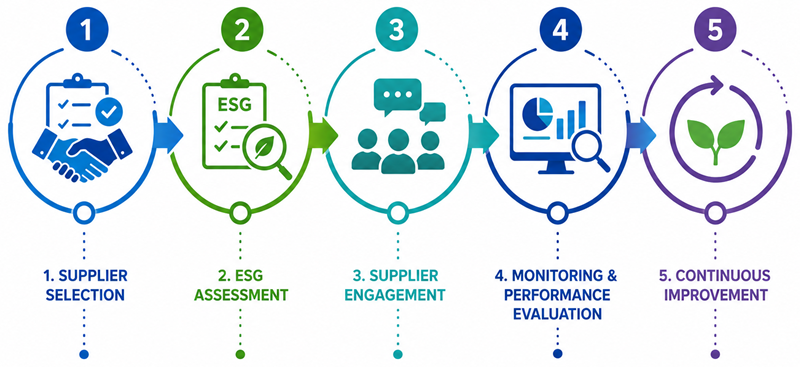
The Company adopts an integrated approach to sustainable supply chain management, covering supplier selection and due diligence, ESG risk assessment, communication of sustainability requirements, ongoing performance monitoring, and collaborative supplier development. This approach aims to promote responsible sourcing practices, enhance supply chain resilience, and drive sustainable value creation throughout the value chain.
| Process | Implementation Approach |
|---|---|
| 1. Supplier Selection | Select suppliers based on principles of transparency, fairness, product and service quality, and reliability, while ensuring compliance with applicable laws and considering Environmental, Social, and Governance (ESG) factors. |
| 2. Supplier Assessment | Assess suppliers on products and services, environmental, social, and governance (ESG) aspects, including related risks, to support risk management across the supply chain. |
| 3. Supplier Communication and Engagement | Communicate the Supplier Sustainable Code of Conduct and encourage suppliers to conduct business ethically, respect human rights, and take responsibility for environmental impacts. |
| 4. Monitoring and Evaluation | Monitor supplier performance in terms of quality, compliance with requirements, and ESG-related issues, and define corrective measures when risk issues are identified. |
| 5. Continuous Review and Development | Continuously review performance and strengthen collaboration with suppliers to raise business standards and build a sustainable supply chain. |
Supplier Selection
The Company adopts a transparent, fair, and objective supplier selection process. All prospective suppliers are subject to qualification screening and approval prior to inclusion in the Company’s Approved Vendor List (AVL). The assessment process considers suppliers’ operational capabilities, business integrity, and alignment with the Company’s sustainability expectations, ensuring that suppliers are well-positioned to establish long-term and sustainable business relationships with the Company.
| Supplier Selection Criteria | Assessment Considerations |
|---|---|
| Price | Competitiveness and overall value for money |
| Quality of Products and Services | Compliance with quality standards and product/service specifications |
| Delivery Performance | Capability to meet agreed delivery schedules and requirements |
| Service Capability | Responsiveness, technical support, and after-sales services |
| Commercial Terms | Suitability of payment terms and other commercial conditions |
Additional Requirements for Selected Suppliers
- Complete the Company’s Supplier Self-Assessment Questionnaire (SAQ).
- Acknowledge, adhere to, and implement the principles outlined in the Supplier Sustainable Code of Conduct.
- Participate in the Company’s ESG assessment process and provide relevant information as required.
Supplier ESG Assessment
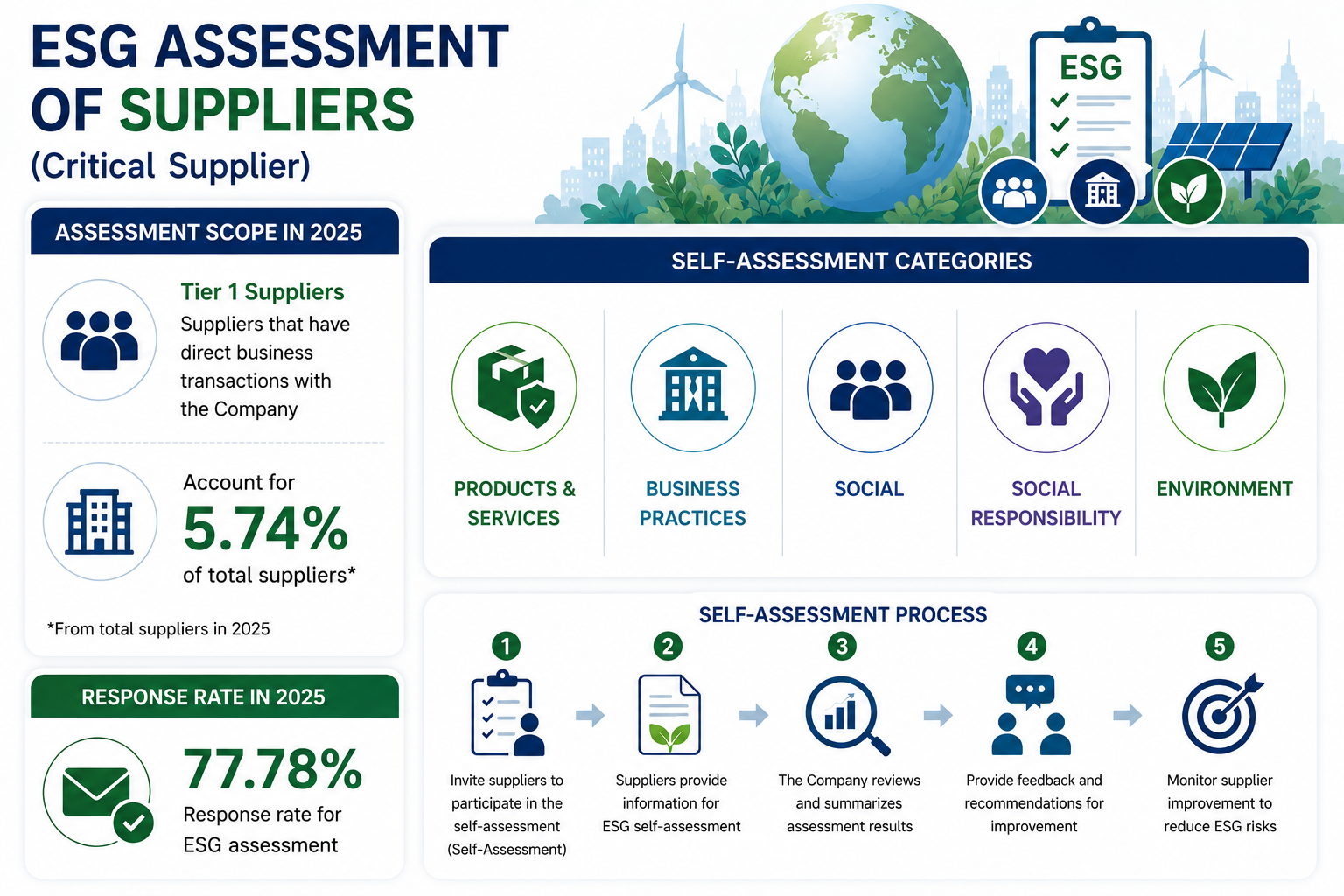
The Company has established an Environmental, Social, and Governance (ESG) assessment framework for suppliers that are critical to its business operations (Critical Suppliers). The assessment scope is determined based on factors such as procurement value, the strategic importance of products and services, and the level of dependency on suppliers. This approach enables the Company to effectively manage supply chain risks and align its procurement practices with its sustainable business objectives.
In 2025, the Company included Tier 1 Suppliers, defined as suppliers that have a direct business relationship with the Company, within the scope of its ESG assessment. A total of 27 Tier 1 Suppliers were assessed, representing 5.74% of the Company’s total supplier base.
The Company regularly reviews the scope of suppliers subject to ESG assessments to ensure alignment with evolving business operations and the risk profile of its supply chain, thereby strengthening sustainable supply chain management and promoting continuous improvement among suppliers.
Assessment Criteria
| Products and Services | Assessment of product and service quality standards, product safety, and delivery capability. |
| Business Conduct | Assessment of corporate governance, risk management, transparency, anti-corruption practices, and legal compliance. |
| Social | Assessment of compliance with human rights principles, labor laws, occupational health and safety requirements, and non-discrimination practices. |
| Social Responsibility | Assessment of community engagement, responsible business practices, and the creation of shared value with stakeholders. |
| Environmental | Assessment of environmental management practices, resource utilization, waste management, and measures to mitigate climate change impacts. |
Supplier Engagement
The Company believes that building strong partnerships with suppliers is a key driver of sustainable supply chain development. Therefore, the Company promotes awareness and understanding of its sustainability principles among suppliers and business partners through ongoing communication, information sharing, and capability-building initiatives. These efforts aim to enhance operational standards and create shared value across the supply chain.
In 2025, the Company organized capability development programs for employees of its business partners, covering product and service knowledge, operational standards, technology, and the Company’s business practices. These initiatives were designed to enable suppliers to deliver services efficiently and in accordance with the Company’s standards. As a result, a total of 1,719 employees of business partners participated in training and development programs, representing an increase from 950 participants in 2024.
| Performance Indicators | 2024 | 2025 | Target |
|---|---|---|---|
| ESG Assessment Response Rate of Tier 1 Suppliers | 100% | 77.78% | ≥95% by 2030 |
| New Suppliers Informed of and Acknowledging the Supplier Sustainable Code of Conduct | 100% | 100% | 100% |
| Suppliers with Significant Violations of Laws, Business Ethics, or ESG Issues Impacting the Company | 0 | 0 | Zero cases |
Fair and Timely Payment to Suppliers
The Company recognizes that fair and timely payment practices are essential to maintaining strong and sustainable relationships with suppliers and supporting the resilience of its supply chain. Accordingly, the Company has established payment terms (Credit Terms) ranging from 0 to 90 days, with an average of 30 days, depending on supplier category, business characteristics, and the duration of the business relationship. This approach ensures that suppliers receive payments within the agreed timeframe and are able to conduct business with the Company on a continuous and sustainable basis.
In 2025, the Company maintained an average payment period of 22 days and recorded no significant overdue payments to suppliers. The Finance Department regularly monitors and reviews the Accounts Payable Aging Report on a monthly basis to ensure that payments are made in accordance with the Company’s policies and agreed terms and conditions.
| Supplier Payment Performance Indicators | 2024 | 2025 | Target |
|---|---|---|---|
| Average Payment Period | 26 days | 22 days | Payments made within the agreed credit terms with suppliers |
| Significant Overdue Payments to Suppliers (Cases) | 0 | 0 | Zero cases |
| Supplier Complaints Related to Payment (Cases) | 0 | 0 | Zero cases |

Employees

Suppliers

Government Agencies and Regulatory Authorities
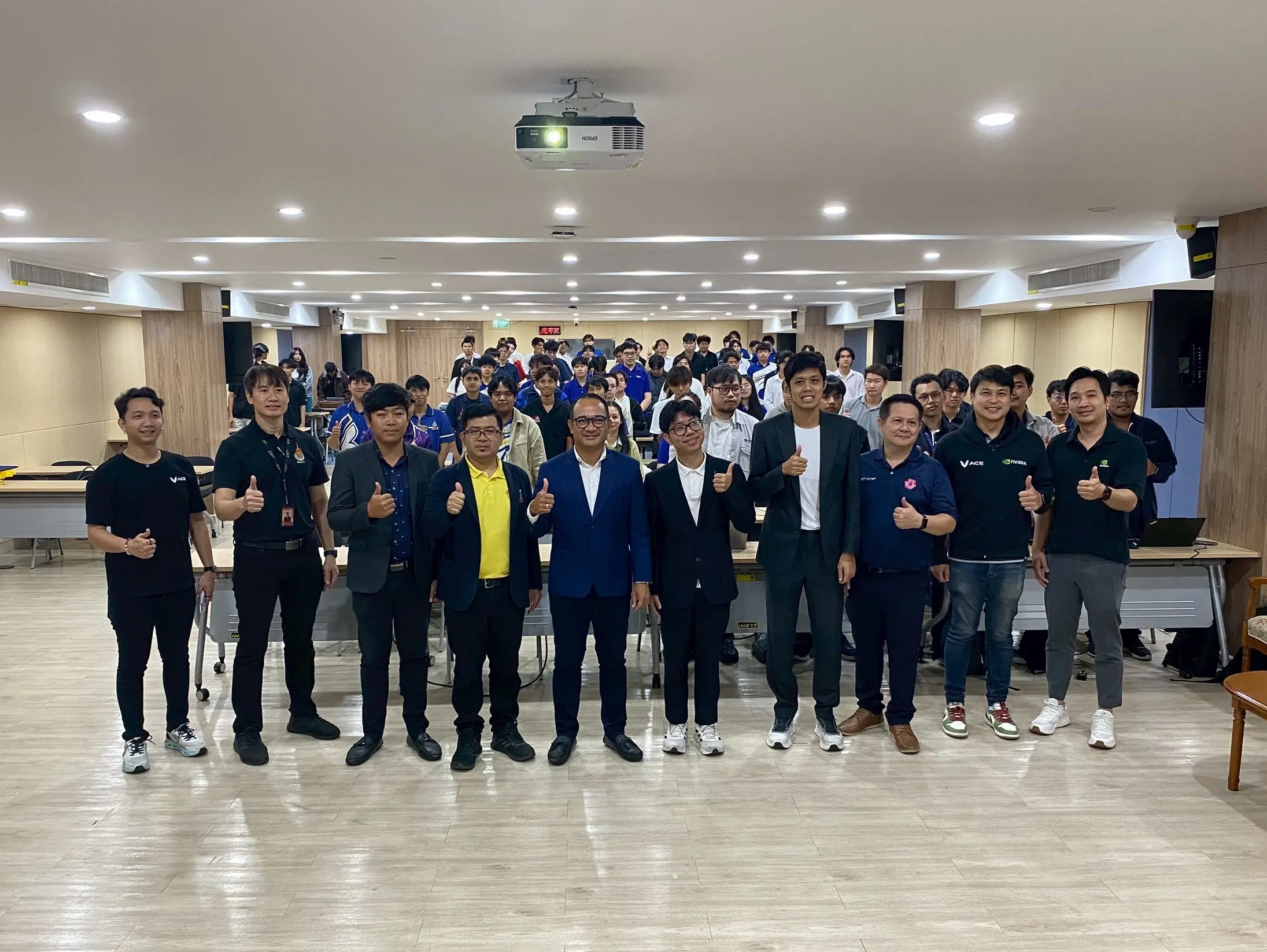
IT CITY x NVIDIA “Powering AI” Inspiring Thai Students in the World of AI
xIT City Public Company has partnered with NVIDIA to launch the “NVIDIA Powering AI” Inspiring Thai Students in the World of AI initiative, a traveling workshop series held at three of Thailand’s leading universities Kasetsart University, King Mongkut’s University of Technology North Bangkok, and Rajamangala University of Technology Thanyaburi. The goal of this project is to share knowledge and spark inspiration among students and AI enthusiasts by introducing them to the latest technologies from NVIDIA that can be applied to real-world projects. During the workshops, participants will learn a wide range of skills—from modern UI design principles and advanced prompting...
อ่านเพิ่มเติม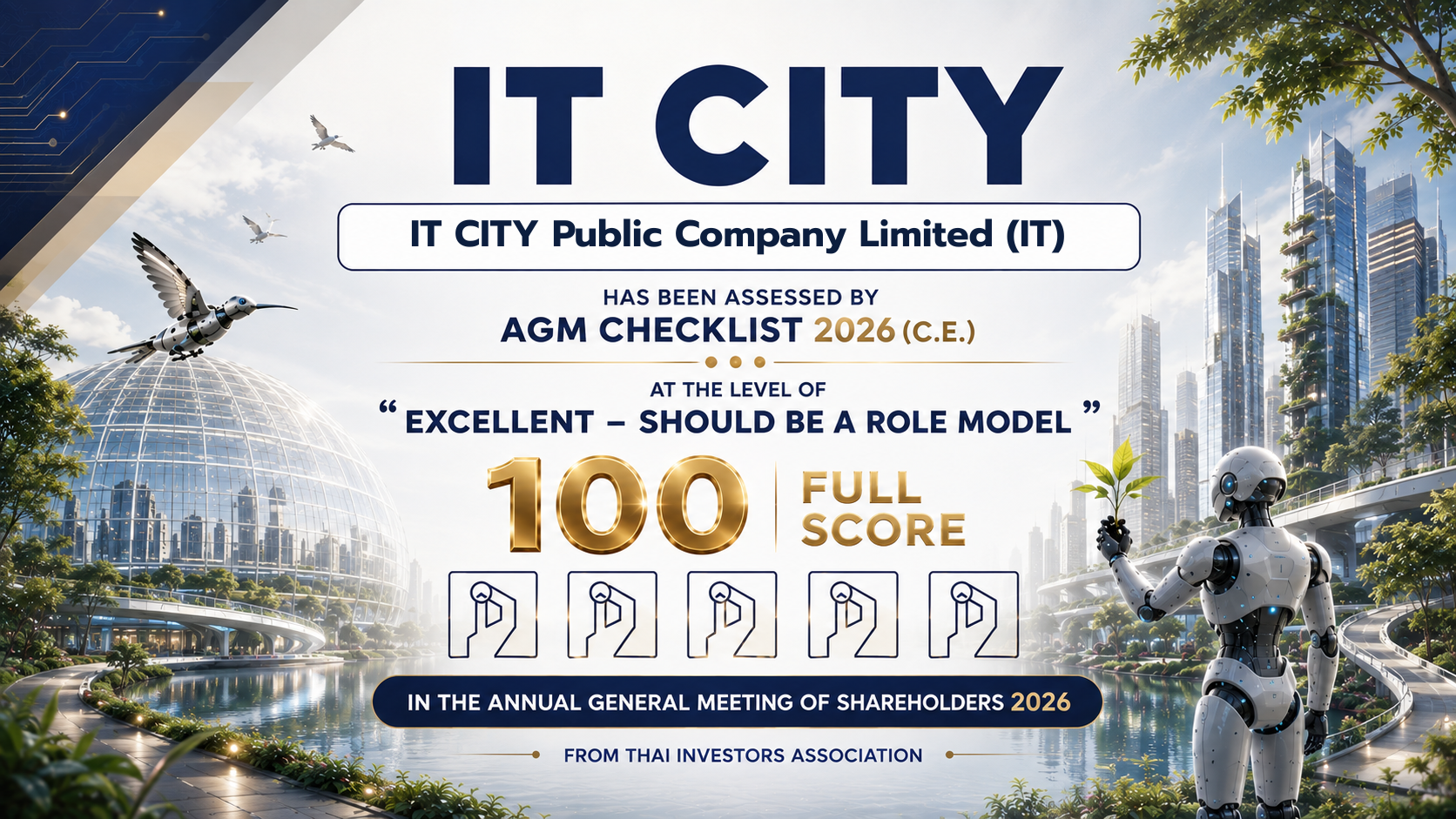
IT City Achieves a Full Score of 100 in AGM Checklist 2026, Rated “Excellent – Should Be a Role Model” for the Second Consecutive Year, Reinforcing Its Commitment to Good Corporate Governance
IT City Public Company Limited received a full score of 100 points in the assessment of the quality of its 2026 Annual General Meeting of Shareholders (AGM Checklist), conducted by the Thai Investors Association (TIA). The Company achieved the “Excellent – Should Be a Role Model” rating for the second consecutive year, reflecting its strong commitment to conducting business with transparency, adhering to good corporate governance principles, and respecting shareholders’ rights and participation. The “Excellent – Should Be a Role Model” rating for the second consecutive year demonstrates the Company’s continued commitment to maintaining high standards in conducting its Annual...
อ่านเพิ่มเติม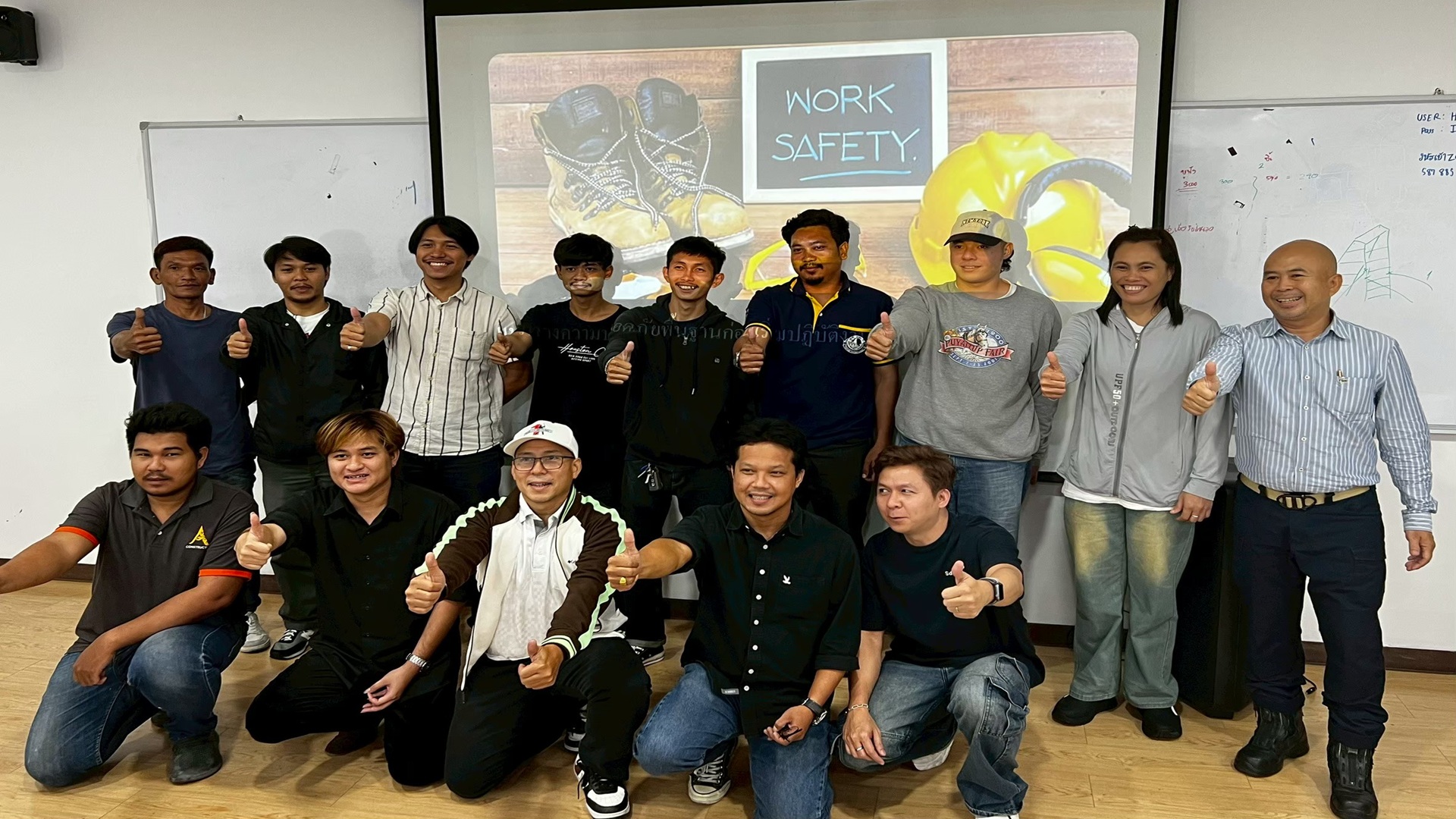
IT CITY Conducts Basic Safety Training for Contractors to Strengthen Safety Culture Across the Value Chain
26 February 2026 – IT City Public Company Limited conducted a Basic Safety Training program for contractors working on the Company’s premises to enhance their knowledge, understanding, and awareness of occupational health, safety, and environmental (HSE) practices prior to commencing work. The training covered key safety topics, including occupational safety laws and regulations, Job Safety Analysis (JSA), the Work Permit system, the proper use of Personal Protective Equipment (PPE), and safe work practices for high-risk activities such as working at heights, confined space entry, and hot work. Participants also received training on emergency preparedness, fire prevention, the proper use of...
อ่านเพิ่มเติม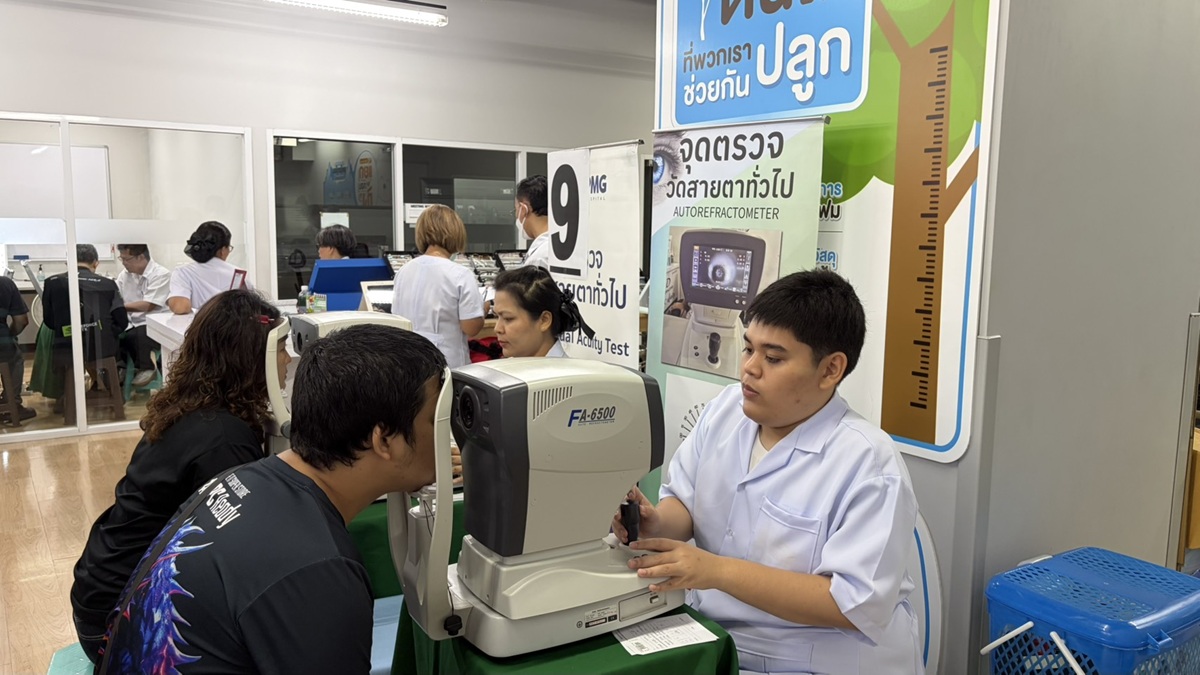
Annual Health Check-up 2026: Promoting Employee Well-being and Quality of Life
On 26 June 2026, IT City Public Company Limited organized its Annual Health Check-up for employees as part of the Company’s commitment to promoting preventive healthcare and enhancing employee well-being. Recognizing that its people are the foundation of sustainable business success, the Company continues to invest in initiatives that support the health, safety, and quality of life of its workforce. The annual health screening covered essential medical examinations appropriate to employees’ age groups and job characteristics. Conducted by qualified healthcare professionals in accordance with recognized medical standards, the programme also provided health consultation and preventive care guidance, enabling employees to...
อ่านเพิ่มเติม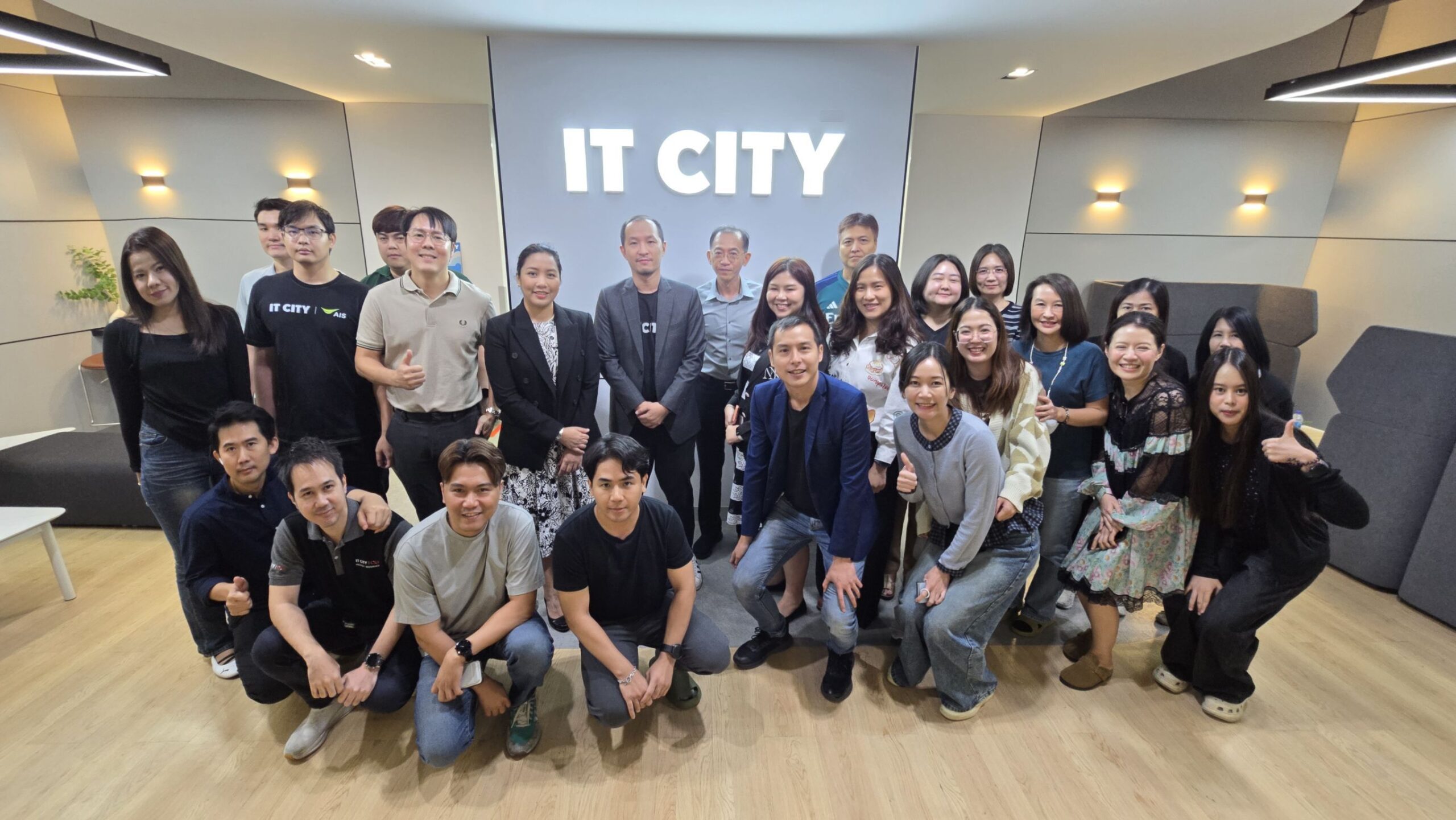
IT CITY Anti-corruption training to strengthen transparency across the entire organization.
On 25 February 2026, IT City Public Company Limited organized a hybrid training session titled “The Roles of Executives and Employees in Combating Corruption” to ensure broad and inclusive participation. More than 80 employees attended the session, reflecting the Company’s strong commitment to enhancing corporate governance standards and conducting business with transparency. The training was honored by the presence of Ms. Phin Sirapraphasiri Senior Manager from Collective Action Against Corruption (CAC), who served as the guest speaker. The session covered the overall situation of corruption in the business sector, risk prevention guidelines, the roles and responsibilities of executives and employees,...
อ่านเพิ่มเติม
IT CITY Sharing Kindness for Children
IT City Public Company Limited continues to reinforce its commitment to social responsibility through the “Share for Change.” initiative, under the activity “IT CITY Sharing Kindness for Children” The initiative aims to foster a culture of sharing among employees while contributing to the enhancement of quality of life for beneficiaries through the donation of essential items for daily use. On January 29, 2026, the Company and its employees jointly donated essential consumer goods and daily necessities to Ban Ratchawithi Home for Girls, supporting the daily needs and well-being of children under its care. The activity reflects the collective dedication of...
อ่านเพิ่มเติม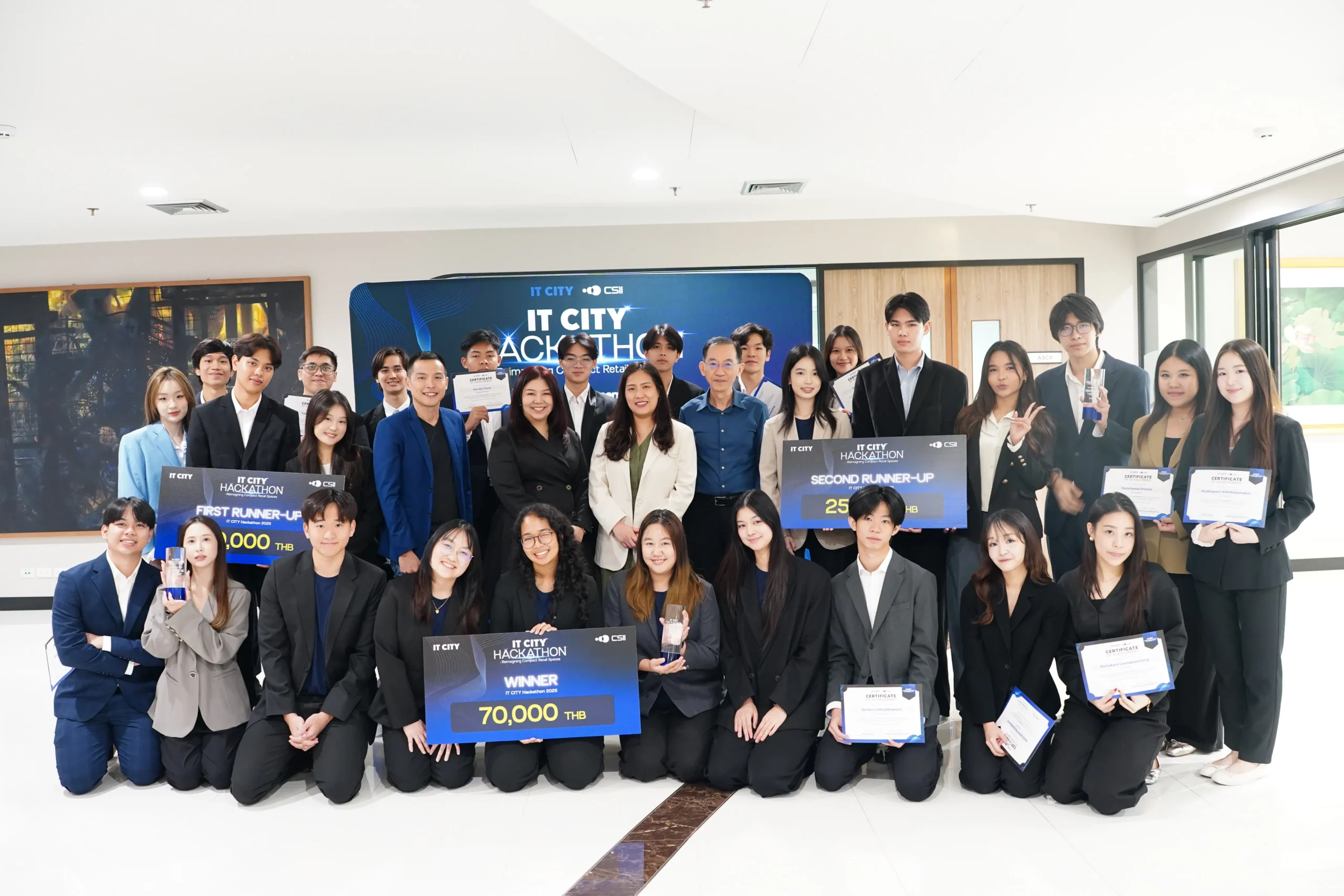
IT CITY Hackathon: Reimagining Compact Retail Spaces
IT CITY Hackathon 2025 has successfully come to an end! A dynamic stage that brought together outstanding ideas in retail innovation, fueled by the creativity and passion of university students. IT CITY and Chulalongkorn School of Integrated Innovation (CSII) in collaboration organized this competition to provide BAScii students with the opportunity to tackle real-world retail business challenges. It aims to encourage the development of innovative ideas that can be further expanded in the future, focusing on enhancing practical skills (Social), designing sustainable business models, and promoting good governance (Governance). The competition concluded with the Final Pitch round on December 12,...
อ่านเพิ่มเติมCode of Conduct for Business Partners

Procurement Policy